
Enforced Disappearances in Pakistan: A Tool to Silence Dissent
A Growing Crisis of Abductions
Since April 2022, Pakistan has witnessed a sharp rise in enforced disappearances targeting politicians, journalists, human rights defenders, and social media activists. These abductions are often carried out with complete impunity, reflecting a deliberate strategy to suppress dissent and intimidate opposition voices. Despite repeated court orders and widespread international condemnation, enforced disappearances continue, undermining the rule of law and violating Pakistan’s obligations under international human rights conventions.
Targeting Journalists and Media Professionals
Journalists critical of the state have frequently been victims of enforced disappearance. Imran Riaz Khan, a well-known reporter and anchor, was forcibly taken in May 2023 and remained missing for over four months before being released. Similarly, Ahmad Farhad, a Kashmiri poet and journalist, was abducted in May 2024, allegedly by intelligence agencies, due to his outspoken human rights advocacy. Although later released, both continue to face harassment and legal intimidation, demonstrating the ongoing risk faced by media professionals in Pakistan.
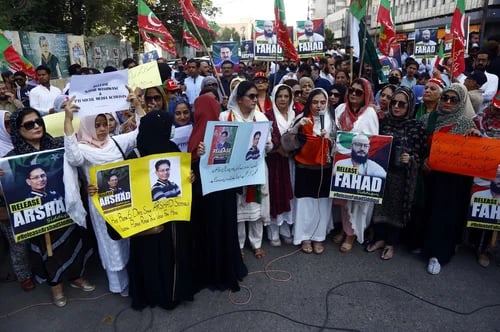
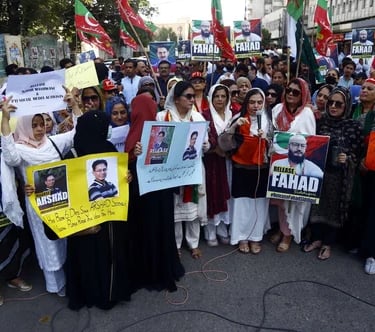
Activists of Tehreek-e-Insaf (PTI) are holding protest demonstration against disappearance of party leaders and workers, at press club on March 31, 2023 in Karachi.
Political Opponents Under Threat
Members of the Pakistan Tehreek-e-Insaf (PTI) have been disproportionately targeted following the removal of former Prime Minister Imran Khan. Party leaders, legal advisors, and active social media supporters have been abducted or intimidated, forming part of a coordinated effort to weaken political opposition and instill fear. Such actions have a chilling effect on democratic participation and civil activism, limiting the ability of citizens to organize and voice dissent.
The Crisis in Balochistan
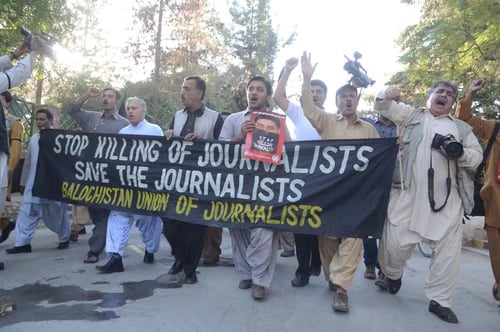
In Balochistan, enforced disappearances have been a persistent human rights emergency for decades. Thousands of students, activists, and ordinary civilians have been abducted by state forces without charges or access to due process. Families are left in prolonged anguish, often with no knowledge of the fate of their loved ones. This ongoing practice suppresses dissent, destabilizes communities, and constitutes a grave violation of international human rights standards, including the International Convention for the Protection of All Persons from Enforced Disappearance.
Ineffectiveness of Domestic Oversight
In 2010, Pakistan established the Commission of Inquiry on Enforced Disappearances (COIED) instead of ratifying the international convention. However, the commission has been widely criticized for failing to deliver justice. The International Commission of Jurists (ICJ) has reported that COIED “wholly failed to address entrenched impunity,” leaving victims and their families without redress. While the commission has traced some missing persons, it has not held a single perpetrator accountable, highlighting systemic impunity and institutional failure.
Summary
Enforced disappearances in Pakistan represent a deliberate strategy to silence dissent, intimidate political opponents, and suppress civil society. From journalists and activists to opposition party members and minority communities, these abductions violate fundamental human rights, weaken democratic governance, and perpetuate a climate of fear. The international community continues to call for accountability, transparency, and the release of all forcibly disappeared individuals.
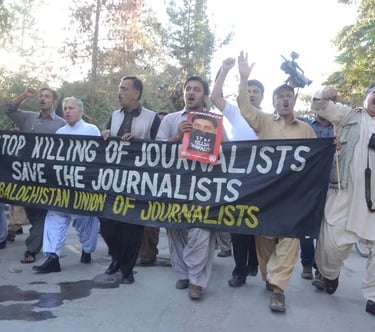
Members of Balochistan Union of Journalist pass through Zarghoon road during protest rally against killing of local T.V channel reporter on October 02, 2012 in Quetta
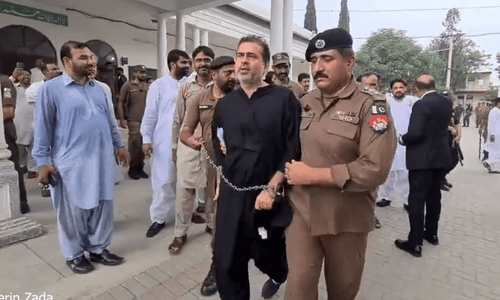

A policeman takes journalist Imran Riaz Khan to a prison in Chakwal after he was arrested from the Attock district judicial complex on Thursday
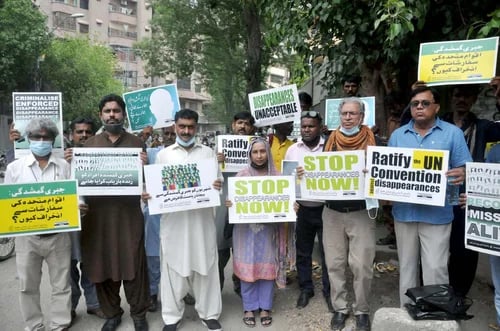
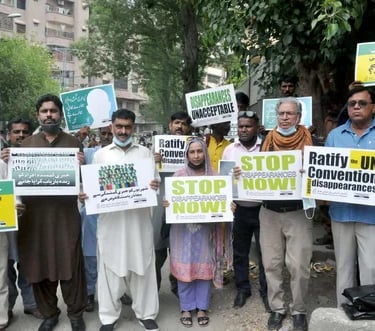
Members of HRCP protest demonstration against recovery of disappeared persons on the occasion of International Day of the Disappeared, on August 30, 2021 in Hyderabad.
ABABEEL
Email: support@ababeel.org
Phone: +358 46 9689508
© 2025 ABABEEL